
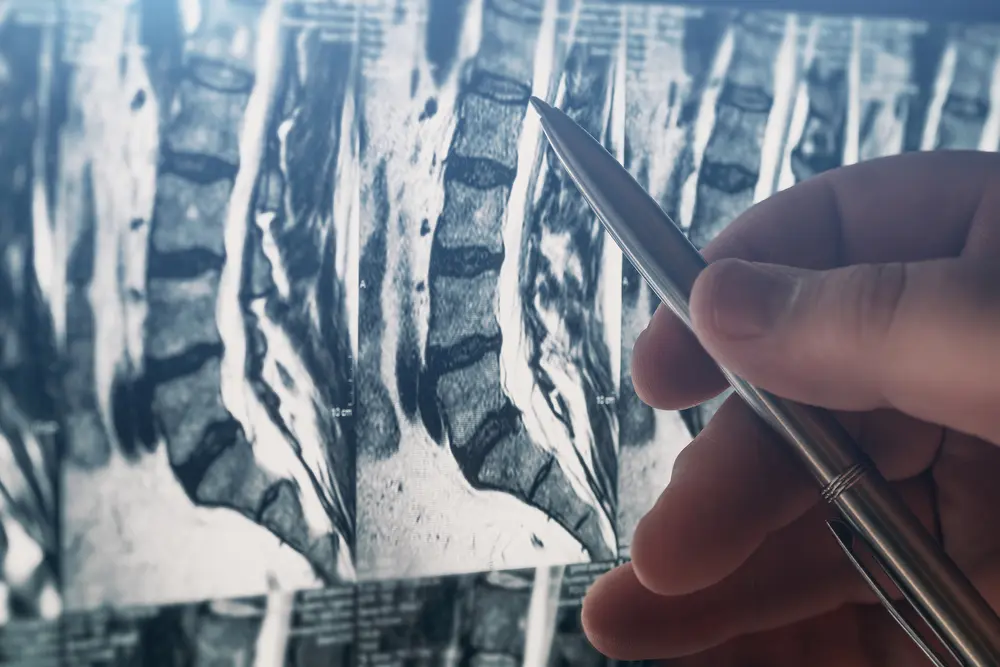
If you’re dealing with back pain, leg numbness, or radiating nerve pain, your doctor may order a herniated disc MRI to find out what’s going on. In this guide, Brooklyn Open MRI explains what the research says about open MRIs in Brooklyn, NY, and how accurately they detect spinal issues.
Herniated Discs Are More Common Than You Might Think
The World Health Organization reports that low back pain affected 619 million people globally in 2020, projected to reach 843 million by 2050. According to disk herniation research, a herniated disc occurs when a disc’s inner material pushes through its outer shell, compressing nearby nerves and causing pain, weakness, or tingling.
MRI Is the Gold Standard for Herniated Disc Detection
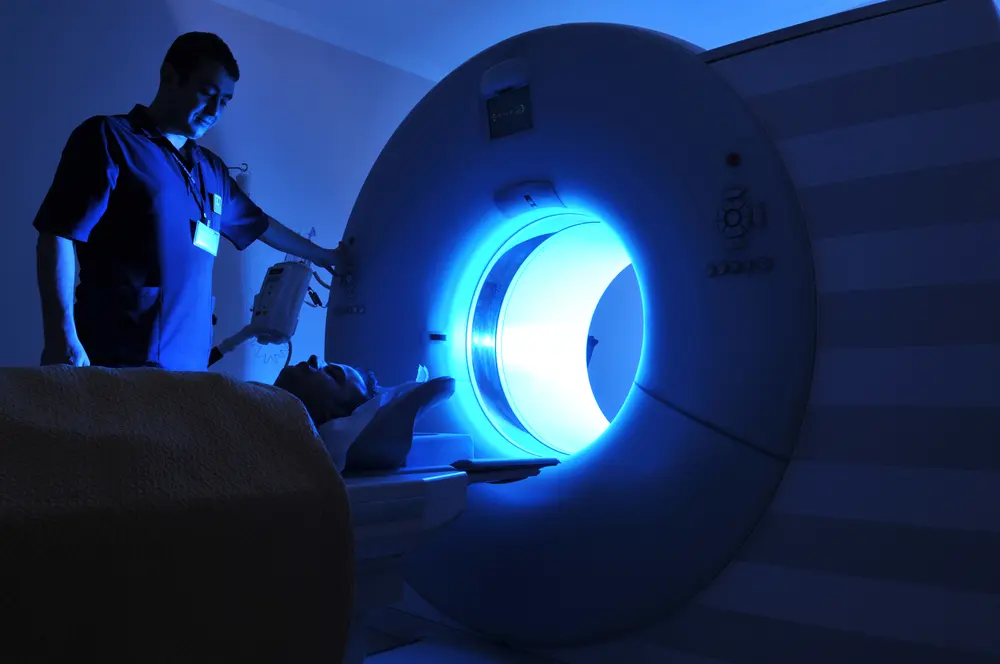
Unlike X-rays, magnetic resonance imaging captures detailed soft tissue images of spinal discs and nerve roots without radiation. It’s the preferred tool for diagnosing disc herniations, degenerative disc disease, sciatica, and spinal stenosis.
Open MRI Accuracy Is Backed by Research
A study comparing MRI findings to surgical outcomes in 211 patients found overall MRI accuracy at 85% for predicting herniated disc type, with 92% accuracy for protruded discs. A separate systematic review reported a summary sensitivity of 80.9% and specificity of 81% across multiple lumbar disc herniation studies.
For most herniated disc MRI evaluations, open and closed systems can both deliver clinically useful results. Your doctor will recommend the right option based on your symptoms and medical history.
Scan Completion Directly Affects Spinal Imaging Reliability
Patients who feel anxious inside a closed MRI tube are more likely to move or stop early, compromising image quality. Open MRI’s spacious design reduces that anxiety and supports more reliable spinal imaging results.
Do You Need To Schedule an Open MRI in Brooklyn?
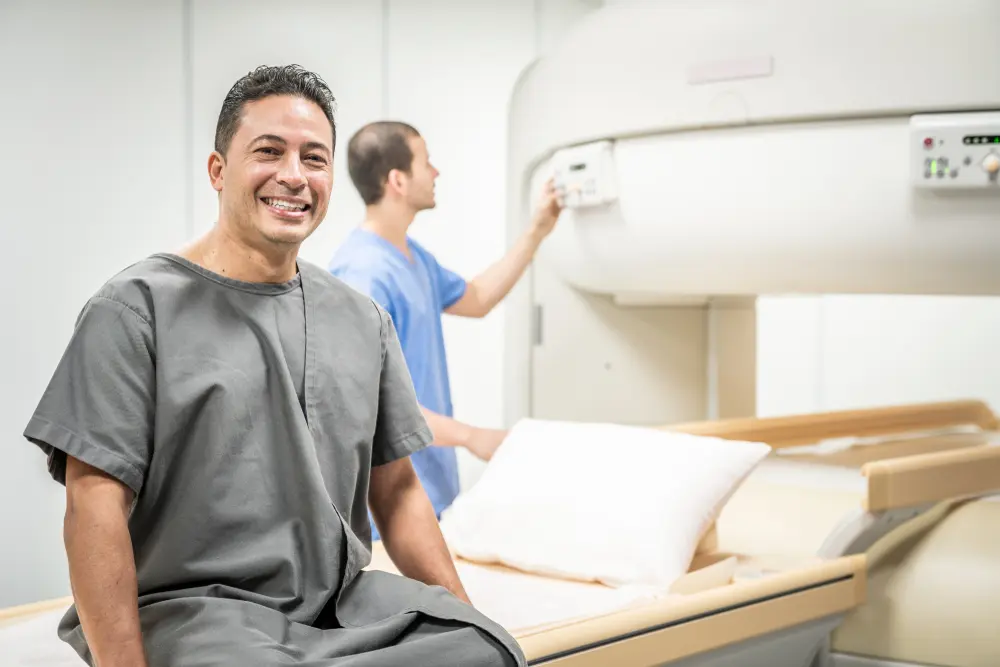
At Brooklyn Open MRI, we offer comfortable imaging solutions to help you get the treatments you need. Learn more about the benefits of open MRIs for patients with limited mobility.
Our doctors accept most insurance plans, including workers’ compensation, no-fault, and PIP (personal injury protection). Same-day appointments may be available. Call Brooklyn Open MRI at (718) 400-6369 to schedule your herniated disc MRI in Brooklyn today.
FAQs Answered by Your Trusted Brooklyn Imaging Center
Here are the most common questions about open MRIs and herniated disc detection.
Are MRIs the Best Scan for a Herniated Disc?
MRI is the preferred method for herniated disc detection, offering detailed soft tissue imaging without radiation and higher specificity than CT scanning.
Can an MRI Miss a Herniated Disc?
MRIs may miss a herniated disc in some cases, as accuracy depends on herniation type and imaging technology.
How Long Does an MRI for Spinal Issues Take?
A spinal MRI typically takes 30 to 60 minutes, depending on the area scanned.
What Is the Difference Between Open vs. Closed MRI Scans for Herniated Discs?
Open MRIs feature an open-sided design that reduces claustrophobia, while closed MRIs use a narrow tube with a stronger magnetic field. Both options provide clear results.